
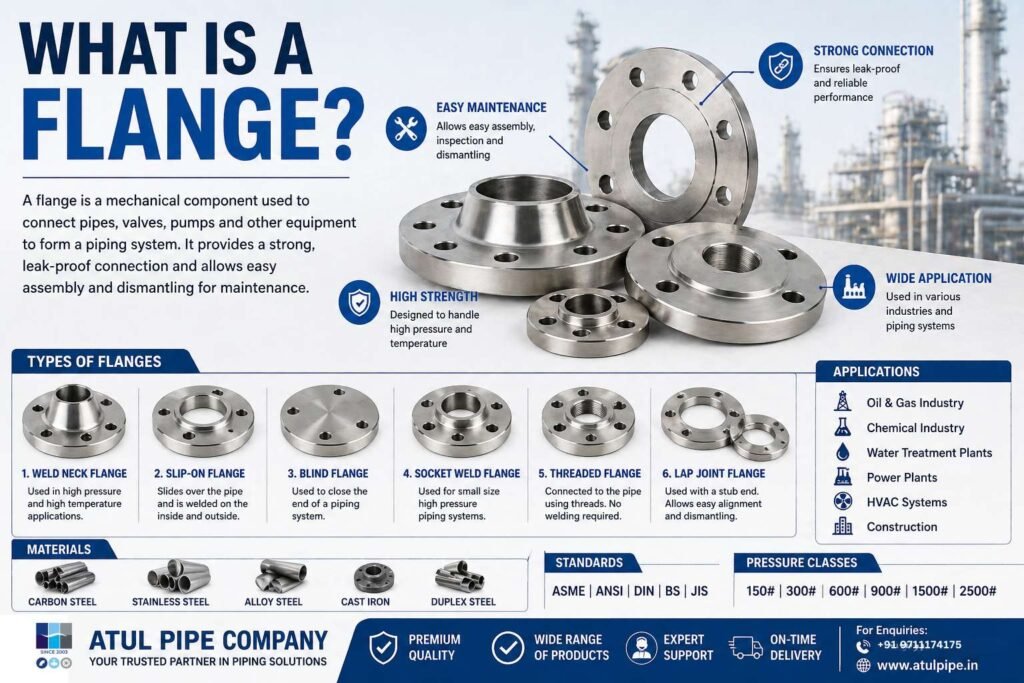
If you work with pipelines or fittings, you must know what is a flange. A flange is a simple but important part of any piping system. It helps connect pipes, valves, and equipment safely.
In industries across Delhi and India, flanges are used daily. From construction sites in Chandni Chowk to large factories, they play a key role. At Atul Pipe Company, we deal with flanges regularly. We understand how important quality and correct selection are.
In this guide, we will explain everything in simple words. You will learn about types of flanges, applications, and real uses in piping systems.
What is a Flange?
A flange is a mechanical component used to join pipes, valves, or equipment. It creates a secure and leak-proof connection in piping systems using bolts and gaskets.
Flange Function in Pipeline
Understanding the flange function in pipeline systems is important. It is not just about joining pipes. It also helps in maintenance and safety.
Main functions of a flange:
- Connect pipes securely
- Allow easy assembly and disassembly
- Prevent leakage with proper sealing
- Support high pressure systems
- Help in inspection and maintenance
In real projects, flanges make repair work easier. You don’t need to cut pipes. Just unbolt and replace.
Types of Flanges
There are many types of flanges used in piping. Each type has a specific purpose.
1. Weld Neck Flange
- Used in high-pressure systems
- Strong and durable
- Common in industrial plants
2. Slip-On Flange
- Easy to install
- Slides over the pipe
- Used in low-pressure applications
3. Blind Flange
- Used to close pipe ends
- Helps in testing pressure
- No center opening
4. Socket Weld Flange
- Used for small pipes
- Strong connection
- Ideal for high pressure
5. Threaded Flange
- No welding required
- Easy to install and remove
- Used in low-pressure systems
6. Lap Joint Flange
- Works with stub ends
- Easy alignment
- Used where frequent dismantling is needed
Pipe Flange Types and Uses
Different pipe flange types and uses depend on the application. Choosing the wrong type can cause leakage or failure.
Common uses:
- Water supply systems
- Oil and gas pipelines
- Chemical industries
- HVAC systems
- Power plants
In Delhi’s industrial areas, slip-on and weld neck flanges are commonly used. They balance cost and strength well.
Flange Applications in Real Life
Let’s understand flange applications with practical examples.
🔹 Construction Projects
Used in plumbing and fire safety pipelines.
🔹 Industrial Plants
Handle steam, chemicals, and gases under pressure.
🔹 Oil & Gas Industry
Used in long-distance pipelines.
🔹 Water Treatment Plants
Ensure leak-proof connections.
🔹 Manufacturing Units
Used in machinery piping systems.
ak168win.vip AK168 – TRANG CHỦ AK168.COM – LINK VÀO AK168 MỚI NHẤT 2026 TẶNG 68K
At Atul Pipe Company, we supply flanges for all these applications. Many clients from Chandni Chowk and nearby areas depend on us for reliable materials.
Industrial Flanges Explained
When we talk about industrial flanges explained, we focus on strength and standards.
Industrial flanges must:
- Handle high pressure
- Resist corrosion
- Meet quality standards
- Fit perfectly with pipes
Materials used:
- Stainless steel
- Carbon steel
- Alloy steel
- Cast iron
Choosing the right material is very important. For example, stainless steel works well in chemical industries.
Comparison Table: Common Flange Types
| Flange Type | Strength | Cost | Best Use |
| Weld Neck | High | High | High pressure systems |
| Slip-On | Medium | Low | General piping |
| Blind | High | Medium | Closing pipe ends |
| Threaded | Low | Low | Low pressure systems |
| Socket Weld | High | Medium | Small diameter pipes |
How to Choose the Right Flange
Choosing the right flange is not complicated if you follow simple steps.
✔ Check pressure and temperature
High pressure needs stronger flanges.
✔ Select correct material
Match material with fluid type.
✔ Consider pipe size
Flange must fit perfectly.
✔ Think about maintenance
Choose easy-to-remove flanges if needed.
✔ Buy from trusted supplier
Quality matters more than price.
At Atul Pipe Company, we guide customers based on their exact needs.
Common Mistakes to Avoid
Even experienced buyers make mistakes. Avoid these:
- Choosing wrong flange type
- Ignoring pressure rating
- Using poor quality gaskets
- Not checking compatibility
- Buying from unreliable suppliers
These mistakes can lead to leakage and system failure.
What is a flange used for?
A flange is used to connect pipes, valves, and equipment in a piping system. It ensures a strong, leak-proof connection and allows easy maintenance.
FAQs
1. What is a flange in piping?
A flange is a connector used to join pipes and equipment securely using bolts and gaskets.
2. What are the main types of flanges?
Weld neck, slip-on, blind, threaded, socket weld, and lap joint are common types.
3. Where are flanges used?
Flanges are used in industries like oil & gas, construction, water supply, and manufacturing.
4. Which flange is best for high pressure?
Weld neck flanges are best for high-pressure applications due to their strength.
5. Can flanges be reused?
Yes, flanges can be reused if they are in good condition and properly maintained.
6. What material is best for flanges?
It depends on use. Stainless steel is good for corrosion resistance, while carbon steel is strong and cost-effective.
Conclusion
Now you clearly understand what is a flange, its types, and its uses. Flanges may look simple, but they are essential for safe and efficient piping systems.
From small plumbing setups to large industrial pipelines, choosing the right flange makes a big difference. It improves safety, reduces maintenance, and increases system life.If you are looking for reliable products and guidance, Atul Pipe Company is here to help. We provide quality flanges and expert support for all your piping needs.