
One wrong pipe can shut down a whole plant. It happens more often than you’d think. A pipe cracks, a leak starts, and by midnight everyone is running around trying to fix it. But you can stop this before it begins. This guide shows you how to select the right pipe material in plain words. Got a job on your table right now? Message the team at atulpipe, tell us what flows through your line, and we’ll point you to the right pipe.
Picking a pipe is not only about price. The liquid or gas inside, the heat, the pressure, and even the air outside all change the answer. A pipe that’s fine for water can fail fast with acid. Atul Pipe Company has made and stocked industrial pipes, valves, and fittings since 2003. We’ve worked with government and private clients across India, so we know what works. Here you’ll see how to select the right pipe material, check a simple chart, and skip the usual mistakes. Wondering which pipe material is best for industry? You’ll get that answer too, along with how to select industrial pipes step by step. Grab a cup of chai and let’s start.
Why Pipe Material Choice Matters So Much
Think of a pipe as a road for whatever moves through your plant. If the road is weak, things break down. The right material keeps the flow steady, keeps workers safe, and saves money for years. The wrong one rusts, leaks, or bursts. That means shutdowns, repair bills, and sometimes danger for your team. Good pipe material selection starts with a few plain questions. What’s inside the pipe? Is it hot or cold? How much pressure does it carry? Does it sit outside in rain, salty air, or dust? Once you answer these, how to select the right pipe material gets much easier. Lots of buyers only look at the price tag. But a cheap pipe that fails in two years costs more than a good one that lasts twenty. Indian and global standards like IS, ASTM, and ASME tell you what a pipe must handle. Ask for test papers, not just promises. A good seller will show them without being asked. Anyone learning how to choose pipe material for industrial use should ask one thing first: what will this pipe carry? The best pipe material for industrial piping is the one that fits your job.
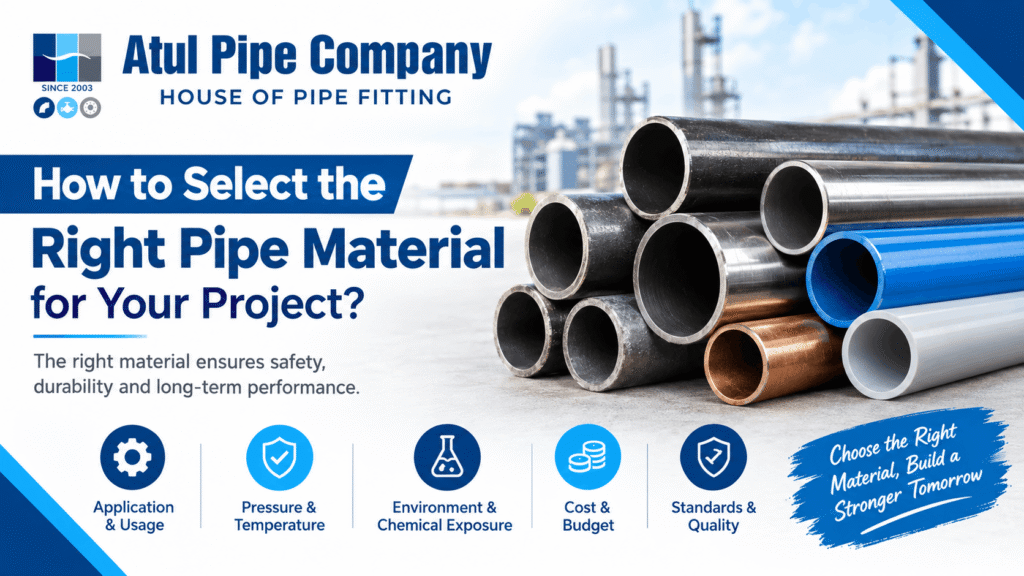
Types of Pipe Material Used in Industry
To learn how to select the right pipe material, first meet the types most plants use.
- Carbon steel: The workhorse of most factories. It’s strong, handles high pressure, and costs little, so it’s often the best pipe material for industrial piping on a budget. Great for oil, gas, steam, and water. Avoid strong acids.
- Stainless steel: These pipes fight rust really well. Food plants, medicine units, and chemical lines love them because they stay clean and last long. They cost more at the start, but repair bills stay low.
- Alloy steel: Need a pipe for very high heat, like power plants and refineries? Alloy steel has extra metals mixed in, so it stays strong when things get hot. It’s a smart pick for tough jobs.
- Galvanized iron: Iron with a zinc coat that slows down rust. It works well for water lines, fire lines, and light jobs. It’s not a good match for strong chemicals or very hot lines.
- PVC and CPVC: These plastic pipes are light, cheap, and never rust. CPVC handles hotter liquids than PVC. They suit water treatment and mild chemicals, but not high pressure or high heat.
- HDPE: This tough plastic bends without breaking and handles bumpy ground well. It’s popular for water supply, drainage, and mining slurry. Leaks are rare when the joints are done right.
Which Pipe Material Is Best for Industry?
The answer depends on your job. This table gives a quick look at the popular choices side by side. wikipedia
| Pipe Material | Best For | Strength | Cost | Watch Out For |
| Carbon steel | Oil, gas, steam, water | High | Low to medium | Rusts in acids and wet air |
| Stainless steel | Food, medicine, chemicals | High | High | Costs more at the start |
| Alloy steel | Power plants, refineries | Very high | High | Needs skilled welders |
| Galvanized iron | Water and fire lines | Medium | Low | Weak against strong chemicals |
| CPVC | Hot water, mild chemicals | Low to medium | Low | Goes soft in high heat |
| HDPE | Water supply, slurry | Medium | Low to medium | Not for very hot lines |
So, which pipe material is best for industry? For most Indian factories, carbon steel wins on value. If your line carries acid, food, or medicine, stainless steel is safer. For very high heat, go with alloy steel. Plastic pipes fit water and light chemicals. There’s no single winner, and anyone who says so is selling something. If you’re hunting for the best pipe material for industrial piping, start with your job. That’s how to choose pipe material for industrial use without wasting money. It’s also the heart of how to select the right pipe material. Not sure how to select industrial pipes from this list? The team at atulpipe can walk you through the industrial pipe materials that suit your line.
How to Select Industrial Pipes Easily
Follow these three steps. They’re simple, and they’ll save you time, money, and a lot of headaches later.
Step 1: Know what’s inside the pipe
Start with the thing that flows through it. Water, oil, steam, gas, acid, or slurry? Each one treats a pipe differently. Acids eat plain steel. Salty water rusts iron. Many people ask which pipe material is best for industry before they know the fluid. Write down what’s inside, and note if it changes over time. That one step cuts your list in half, and it’s where how to select the right pipe material really begins.
Step 2: Check heat and pressure
Every pipe has a limit. Find the highest heat and pressure your line will ever see, not just the daily average. Plastic softens when it’s hot. Steel handles much more, and alloy steel handles the most. Add a safety gap so the pipe never works at its very edge. This is where how to choose pipe material for industrial use gets clearer, because heat and pressure knock out many options fast.
Step 3: Match the pipe to your site and budget
Think about where the pipe lives. Outdoors, underground, or inside a hot room? Salty coastal air needs better rust protection. Then look at the full cost, not just the price tag. A pricier pipe that lasts longer is often cheaper over ten years. It can be the best pipe material for industrial piping in the long run. This last check turns how to select the right pipe material into a choice you can feel good about.
Mistakes to Avoid When Buying Industrial Pipes
After more than twenty years of serving clients, we’ve seen the same slip-ups again and again. The biggest is picking on price alone. Next is skipping the test papers. Some buyers forget about welding and joining, then find out too late that the fittings don’t match. Others copy an old order without checking if the job has changed. We remember a plant manager from a chemical unit who ordered plain carbon steel to save money. Within a year, the lines were leaking and the plant stopped twice. He came back to us and switched to stainless steel, and the trouble stopped. He told us he wished he’d asked one simple question earlier: which pipe material is best for industry when acid is involved? That’s why we always ask about the fluid first. It’s the base of how to select the right pipe material. If you’re stuck on how to choose pipe material for industrial use, or how to select industrial pipes for your own plant, don’t guess. Bring your details, and we’ll work through them together. We’re happy to look at your fluid and heat numbers. A ten-minute chat now can save you lakhs later.
Conclusion
Choosing a pipe doesn’t have to feel scary. Start with what flows inside, check heat and pressure, think about your site, and compare the total cost. Keep the standards in mind, and never skip the test papers. Keep this guide handy and share it with your buying team. That’s really all there is to how to select the right pipe material. Maybe you’re asking which pipe material is best for industry. Maybe you need to know how to select industrial pipes for a tricky job. The same simple steps apply. Finding the best pipe material for industrial piping takes a little homework, but it pays you back for years.
FAQs About Pipe Material Selection
1. What’s the first thing to check when picking a pipe?
Check what flows inside it. This is step one in how to select the right pipe material, because acids, salty water, oil, and food items all need different pipes. Many people ask which pipe material is best for industry, but the fluid decides that first. Look at heat, pressure, and cost after.
2. How to choose pipe material for industrial use?
Match the pipe to the fluid, heat, pressure, and site. Then check standards like IS or ASTM, compare the full cost over the years, and buy from a supplier who shares test papers. Write these points down before you talk to any seller.
3. Which pipe material is best for industry?
There’s no single best one. Among common industrial pipe materials, carbon steel suits general jobs, stainless steel suits acids and clean lines, and alloy steel suits high heat. Start with the job, and you’ll see how to select the right pipe material without much stress.
4. What is the best pipe material for industrial piping in high heat?
Alloy steel is usually the best pipe material for industrial piping in high heat, like power plants and refineries. Stainless steel can also work, depending on the exact temperature and pipe size. Plastic pipes should stay away from hot lines, since they soften fast.
5. How to select industrial pipes for acid lines?
Look at stainless steel or CPVC first, based on the acid type and heat. Plain carbon steel rusts fast in acid. Always share the acid name and strength with your supplier. That detail matters a lot in how to select the right pipe material for chemical work.
6. Is stainless steel worth the extra cost?
Often yes, especially for food, medicine, or chemical work. It resists rust, stays clean, and needs fewer repairs. When you learn how to choose pipe material for industrial use, compare the cost over ten or twenty years, not just the first bill.
7. Can plastic pipes be used in factories?
Yes, for the right jobs. PVC, CPVC, and HDPE work well for water, drainage, and mild chemicals. They aren’t the best pipe material for industrial piping when heat or pressure runs high, so check the limits first.
8. How to select the right pipe material for outdoor lines?
Think about rain, sun, and salty air. Galvanized iron and coated carbon steel handle open air well, and HDPE works for buried lines. Coastal sites may need stainless steel for extra protection. That’s how to select industrial pipes that don’t rust away early.
9. What standards should industrial pipes follow?
Common ones are IS, ASTM, and ASME. They set rules for strength, size, and testing. Ask for a test certificate with every batch, so you know the pipe matches its label. Any guide on how to select industrial pipes will tell you the same.
10. How long does an industrial pipe last?
It depends on the material, the fluid, and the care it gets. A good steel pipe can last twenty years or more, while a wrong pick may fail in one or two. Regular checks help too. Knowing how to choose pipe material for industrial use adds years to that number.
Contact US :
Landline: 011-40204120
Sushil Goyal 97111 74175 93500 21025
Aditya Goyal 9711474475
Visit US : https://share.google/W1Ndo6Sv2wIZwFxvw