
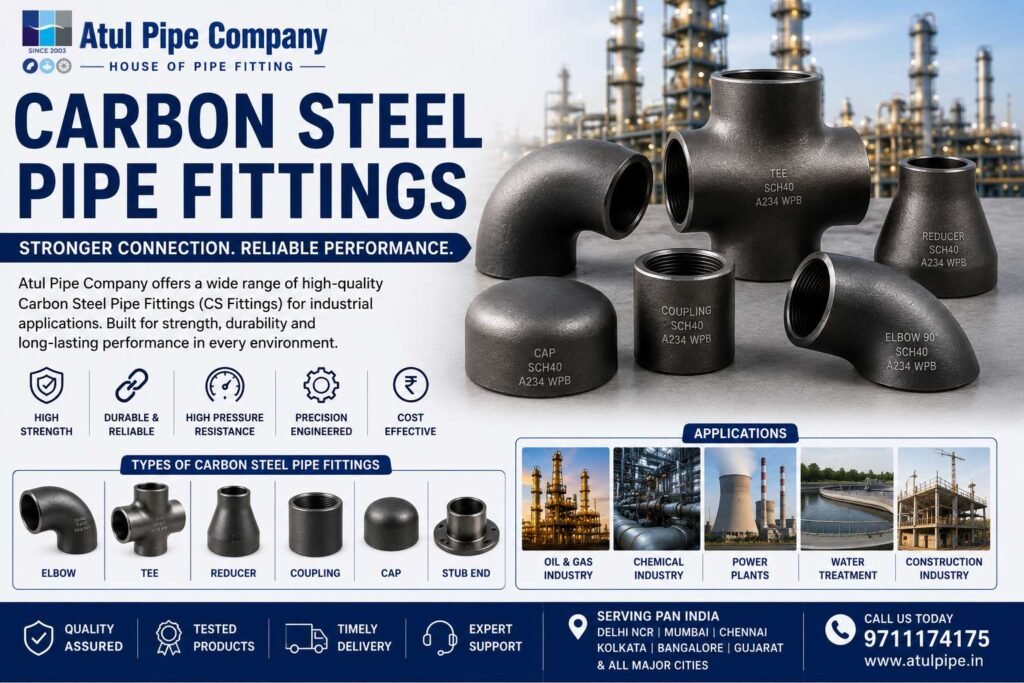
Industrial piping systems need strong and reliable components to perform efficiently. Among the most trusted options available today are carbon steel pipe and fittings. These products are widely used in industries because of their durability, strength, and ability to handle high pressure.
From manufacturing plants in Delhi NCR to large infrastructure projects across India, carbon steel pipe fittings play a key role in ensuring safe and smooth operations.
At Atul Pipe Company, we regularly work with contractors, industries, and project managers who rely on quality carbon steel piping solutions. This guide explains everything you need to know about carbon steel fittings, their types, uses, benefits, and applications.
What Are Carbon Steel Pipe Fittings?
Carbon steel pipe fittings are piping components made from carbon steel that connect pipes, change flow direction, regulate pressure, and support industrial piping systems. They are widely used because of their strength and cost-effectiveness.
Why Carbon Steel Pipe and Fittings Are Popular
Many industries choose carbon steel because it offers an excellent balance between performance and affordability.
Key advantages include:
- High strength
- Good pressure resistance
- Long service life
- Cost-effective solution
- Suitable for industrial environments
In our experience, carbon steel fittings perform exceptionally well in heavy-duty industrial applications where reliability matters.
Types of Carbon Steel Pipe Fittings
Different piping systems require different fittings. Understanding the available options helps buyers make better decisions.
1. Carbon Steel Elbow
Elbows change the direction of fluid flow.
Common Types:
- 45-degree elbow
- 90-degree elbow
- Long radius elbow
- Short radius elbow
Applications:
- Water pipelines
- Industrial process plants
- Oil and gas systems
2. Carbon Steel Tee
A tee fitting creates branch connections.
Uses:
- Fluid distribution systems
- Industrial process pipelines
- Chemical plants
Benefits:
- Easy flow diversion
- Strong connection
3. Carbon Steel Reducer
Reducers connect pipes of different sizes.
Types:
- Concentric reducer
- Eccentric reducer
Applications:
- Pressure control systems
- Industrial fluid transfer
4. Carbon Steel Coupling
Couplings join two pipe sections securely.
Advantages:
- Leak-resistant
- Easy installation
- Strong connection
5. Carbon Steel Cap
Caps seal the end of pipelines.
Common Uses:
- Pipeline testing
- Temporary shutdowns
- System isolation
Carbon Steel Pipe Fittings vs Stainless Steel Fittings
Many buyers compare carbon steel with stainless steel before making a purchase.
| Feature | Carbon Steel Fittings | Stainless Steel Fittings |
| Strength | High | High |
| Cost | More Affordable | Higher Cost |
| Corrosion Resistance | Moderate | Excellent |
| Industrial Use | Very Common | Specialized Applications |
| Maintenance | Moderate | Lower |
Practical Insight
For most industrial projects, carbon steel provides excellent value. Stainless steel is often chosen when corrosion resistance is the top priority.
Applications of Carbon Steel Pipe Fittings
The versatility of carbon steel makes it suitable for many industries.
Oil and Gas Industry
Carbon steel fittings handle high pressure and demanding environments.
Common Applications:
- Refineries
- Pipelines
- Processing plants
Construction Projects
Builders use carbon steel fittings in commercial and industrial projects.
Benefits:
- Strong structure
- Long-lasting performance
Power Plants
Steam systems require durable fittings that can withstand high temperatures.
Water Treatment Facilities
Carbon steel fittings support water transportation and processing systems.
Manufacturing Industries
Factories rely on these fittings for production processes and utility pipelines.
Across Delhi NCR, carbon steel piping systems remain one of the most widely used industrial solutions.
Benefits of Carbon Steel Pipe and Fittings
Choosing the right piping material impacts long-term performance.
High Strength
Carbon steel can withstand heavy pressure and stress.
Long Service Life
Quality fittings provide years of reliable operation.
Cost-Effective
Carbon steel offers strong performance at a reasonable cost.
Easy Availability
These fittings are widely available across India.
Versatile Applications
Suitable for multiple industries and environments.
How to Choose the Right Carbon Steel Pipe Fittings
Selecting the right fitting helps prevent future problems.
Check Pressure Ratings
Ensure the fitting matches system requirements.
Verify Material Grade
Different grades are designed for different applications.
Match Pipe Dimensions
Proper sizing prevents leakage and performance issues.
appak168.com AK168.COM Trang Chủ Chính Thức | Đăng Ký +68k
Consider Environmental Conditions
Operating temperature and fluid type matter.
Buy From Trusted Suppliers
Reliable suppliers provide quality-tested products.
At Atul Pipe Company, we help customers select products based on their specific project requirements.
Real-World Buying Tips
Based on industry experience, these tips can help avoid common mistakes.
Inspect Surface Quality
Look for cracks, dents, or poor finishing.
Request Material Certifications
Certified products offer greater reliability.
Compare Specifications
Don’t compare products based only on price.
Plan for Future Maintenance
Choose fittings that simplify servicing and replacement.
Common Mistakes Buyers Should Avoid
Many buyers focus only on initial costs.
Avoid These Mistakes:
- Choosing incorrect fitting size
- Ignoring pressure ratings
- Purchasing uncertified products
- Mixing incompatible materials
- Selecting suppliers based only on low price
These issues often lead to higher maintenance costs later.
Why Delhi NCR Industries Trust Carbon Steel Fittings
Industrial hubs in Delhi, Noida, Gurugram, Faridabad, and Ghaziabad require durable piping systems.
Carbon steel fittings help businesses:
- Improve operational efficiency
- Reduce downtime
- Maintain pipeline safety
- Lower long-term costs
This is why carbon steel remains a preferred choice across industrial sectors.
FAQs
1. What are carbon steel pipe fittings?
Carbon steel pipe fittings are components used to connect, redirect, control, or terminate industrial pipelines.
2. Where are carbon steel pipe fittings used?
They are commonly used in oil and gas, construction, power plants, water treatment, and manufacturing industries.
3. Are carbon steel fittings durable?
Yes. High-quality carbon steel fittings offer excellent strength and long service life.
4. What is the difference between carbon steel and stainless steel fittings?
Carbon steel is generally more affordable, while stainless steel provides better corrosion resistance.
5. Which carbon steel fitting is used to change pipe direction?
An elbow fitting is used to change the direction of flow.
6. How do I choose the right carbon steel fitting?
Consider pressure rating, pipe size, material grade, and application requirements.
7. Why buy carbon steel pipe fittings from Atul Pipe Company?
Atul Pipe Company focuses on quality products, practical guidance, and dependable service for industrial customers.
Conclusion
Carbon steel pipe and fittings continue to be one of the most trusted solutions for industrial piping systems. Their strength, affordability, and versatility make them suitable for a wide range of applications.
Whether you are working on a manufacturing facility, infrastructure project, water treatment plant, or industrial pipeline, choosing the right carbon steel pipe fittings is essential for safety and performance.At Atul Pipe Company, we are committed to helping customers find reliable piping solutions that meet their project requirements. Investing in quality fittings today helps ensure smoother operations and lower maintenance costs in the future.