
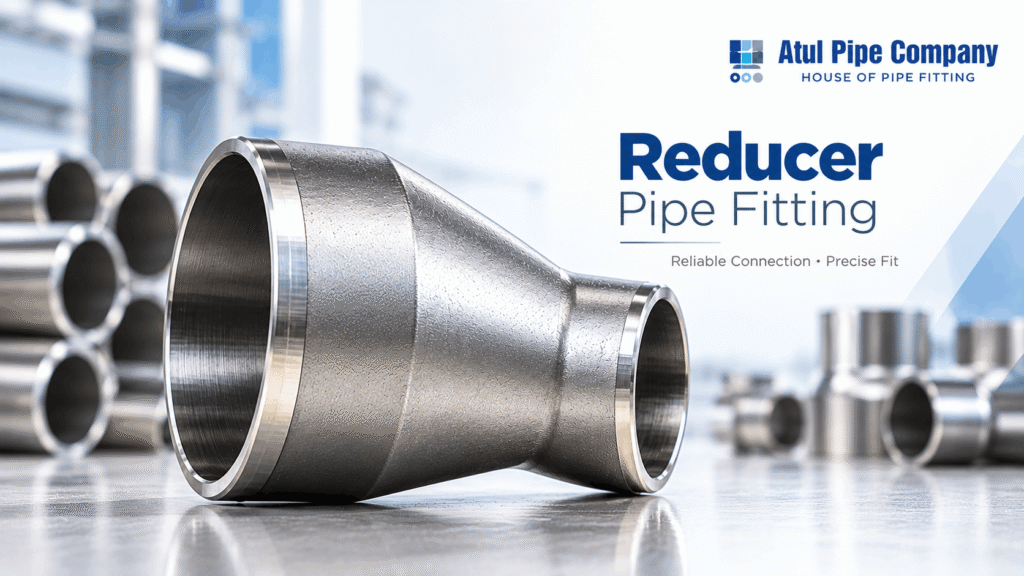
Ever seen a pipeline choke because two pipes just did not match? It happens more than you think, and a small part can fix it. A reducer pipe fitting joins two pipes of different sizes so the flow stays smooth. Need help right now? Message Atul Pipe on WhatsApp today, and we will help you pick the right size.
We started Atul Pipe Company in 2003. Since then, we have worked as a trusted its manufacturer and stockist for factories, plants, and government projects across India. We have seen every kind of pipe problem, and we know how to solve most of them fast.
In this blog, we will keep things simple. You will learn what a reducer does, the main types, how to choose one, and what to ask before you buy. There is also a real-life style story and a short FAQ at the end. We wrote this the way we talk to our own clients. Whether you run a small workshop or manage a big plant, the basics stay the same. Once you get them, buying gets easy. Grab a cup of tea and read on. By the end, you will feel ready to buy.
What Is a Reducer Pipe Fitting?
A reducer pipe fitting is a small part that joins two pipes of different sizes. Think of a funnel. It is wide at the top and small at the bottom, and water moves through it without a fuss. A reducer works the same way inside a pipeline. You weld or screw it between the two pipes, and the liquid or gas keeps moving.
Why does this matter? Pipes rarely stay one size from start to finish. A main line may be wide, but a pump or a valve may need a smaller line. Without a reducer, you would have gaps, leaks, and a lot of pressure trouble. Most industrial reducer pipe fitting pieces are made from carbon steel, stainless steel, or alloy steel, so they can handle heat, pressure, and tough chemicals. You will find them in oil and gas plants, power stations, water treatment units, and chemical factories. Even a small food unit uses them, which is why a reducer pipe sells them all year. When the size is right and the joint is clean, you barely notice the fitting at all. It should just work quietly in the background.
Types of Reducer Pipe Fitting Explained Simply
Not every industrial reducer pipe fitting works alike, so here are the main kinds you will meet.
- Concentric reducer: This one looks like a cone with both ends on the same center line. It keeps the pipe straight and works best on vertical lines or where fluid moves at a steady pace.
- Eccentric reducer: The two ends sit off center, so one side stays flat. Fitters use it on horizontal lines to stop air pockets or sludge from building up, especially near pumps.
- Butt weld reducer: You weld this one straight onto the pipe ends. It makes a strong, smooth joint with no weak spots, so plants pick it for high pressure and long-running lines.
- Socket weld reducer: The pipe slides into a small cup, and then you weld around it. It suits smaller pipe sizes and tight spaces, and it is easy to line up without much fuss.
- Threaded reducer: This type screws on, so you do not need a welder. It is handy for low pressure work and water lines, and a reducer pipe fitting supplier can usually offer it in many sizes.
- Forged and swage reducer: These are thick, tough pieces for very high pressure and heat. Buyers often ask a its manufacturer for these on oil, gas, and steam lines, where a failed joint could cause real trouble.
Concentric vs Eccentric Reducer: Which One Fits?
This table shows how the two most common reducer pipe fitting types differ, so you can choose fast. wikipedia.
| Point | Concentric Reducer | Eccentric Reducer |
| Shape | Cone shape, centered | One side flat, off center |
| Best for | Vertical pipes | Horizontal pipes |
| Flow | Smooth and even | Stops air and sludge pockets |
| Common use | Clean liquids and gases | Pumps and suction lines |
| Ease of fitting | Simple to line up | Needs care on which side faces up |
| Pipe alignment | Center lines match | Top or bottom stays level |
| Common mistake | Using it on a flat line that needs a flat side | Turning the flat side the wrong way |
So which one should you pick? If your pipe runs straight up or down, go concentric. If it runs flat across a floor or rack, eccentric usually wins. A good tip is to ask where the pump sits. On the suction side, keep the flat side on top so air can escape. On lines that carry sludge, keep the flat side at the bottom. We keep both types ready in common sizes, like any good its stockist should. Not sure? Send us your drawing. A reducer pipe fitting supplier worth trusting checks these small details every day.
How to Choose the Right Reducer Pipe Fitting
Follow these three simple steps to dodge the most common buying mistakes and get a fitting that lasts.
Step 1: Match the Size and Pressure
Start with the two pipe sizes your reducer pipe must join. Write down the big end and the small end. Then check the pressure your line will face on a normal day and on a bad day. A fitting that is fine for water may fail on steam. Also check the pipe wall thickness, called the schedule. If it does not match, the weld will not sit right. When in doubt, ask before you order.
Step 2: Pick the Right Material
The material decides how long your industrial its lives. Carbon steel is strong and cost friendly, so it suits many general lines. Stainless steel fights rust, which helps in food, medicine, and chemical work. Alloy steel handles high heat. Always match the fitting to the pipe it joins. Mixing metals can cause rust at the joint over time. Ask for a test certificate so you know what you are getting.
Step 3: Pick a Partner You Can Trust
A good fitting can still cause trouble if the seller is slow or careless. Try its stockist who keeps common sizes ready, so you do not wait weeks. Need odd sizes? A reducer pipe fitting manufacturer can make them. And when a reducer pipe fitting supplier shares papers and delivery dates upfront, that is a good sign. Then call and talk. A seller who listens is worth more than one who only quotes a price.
Real Buyer Experience with Reducer Pipe Fitting
Here is a story we hear a lot. A plant manager once ordered reducers from a random seller because the price looked great. The pieces came late. Two had the wrong wall thickness, and one had a rough weld end. His team lost three days fixing the line. Then he called us. We checked his drawing, asked about pressure and fluid, and sent a matching set from stock. Nothing fancy. Later he said the best part was hearing the choices in plain words.
Now he treats us as his go-to its supplier and its stockist for every new job. He also likes that we are a real reducer pipe fitting manufacturer, so odd sizes are not a problem. That is why we tell every buyer the same thing. Price matters, but papers, size checks, and honest advice matter more. Do not feel shy about asking twice. A cheap its is that fails costs far more than a good one that lasts. For any industrial reducer pipe fitting order, ask questions first. If you have a story like this, we would love to hear it.
Conclusion : Pick the Right Fit and Buy with Confidence
Reducers are small parts, but they carry a big job. The right its keeps flow steady, cuts leaks, and saves you from costly stops. The wrong one can cause weeks of trouble. So take a little time, check your sizes, and pick your material with care.
Let us quickly go over what we covered. Know the type of reducer pipe fitting you need, whether it is concentric or eccentric. Match the size, pressure, and material. Ask for papers. And pick a partner who is happy to explain things in plain words. Whether you need a reducer pipe fitting manufacturer for custom sizes, a reducer pipe fitting supplier for steady orders, or a reducer pipe fitting stockist for quick delivery, the same rule applies. Trust matters most.
Frequently Asked Questions About Reducer Pipe Fitting
Q1. What is a reducer pipe fitting used for?
An industrial reducer pipe fitting joins two pipes of different sizes and keeps liquids or gases moving smoothly. Every line that changes size needs one. Plants use it to connect main lines to pumps, valves, and tanks without leaks, so the whole pipeline stays safe and steady.
Q2. How do I find a good reducer pipe fitting manufacturer?
Look for years in business, clear quality checks, and test papers with every order. Ask to see samples or past work. Also check that they serve clients like yours. A maker who answers your questions calmly and fast is usually a safe bet.
Q3. Where can I buy from a trusted reducer pipe fitting supplier?
Start with suppliers who have been around for years and serve both government and private clients. Atul Pipe has done this since 2003, and you can reach us by WhatsApp or Instagram for a quick quote.
Q4. Does a reducer pipe fitting stockist keep ready stock?
A good reducer pipe fitting stockist keeps common sizes and materials on the shelf, so your order can leave fast. For rare sizes, ask first. Some items may need a short wait, and an honest seller will tell you upfront.
Q5. What is an industrial reducer pipe fitting made of?
Most are made from carbon steel, stainless steel, or alloy steel. The best pick depends on the fluid, heat, and pressure in your line. Stainless suits clean or rust-prone work, and carbon suits general jobs. Ask for the grade on the paperwork.
Q6. Can a reducer pipe fitting manufacturer make custom sizes?
Yes, in many cases. Share your drawing, size, wall thickness, and material, and the team can tell you what is possible. Custom orders may take longer than ready stock, so ask early and plan ahead.
Q7. How do I know which reducer pipe fitting size to order?
Measure the outer size of both pipes and note the wall thickness. Then order by big end by small end, like 4 by 2 inch. If you are unsure, send a photo or drawing and we will check.
Q8. Is an industrial reducer pipe fitting safe for high pressure?
Yes, if you choose the right type, material, and wall thickness. Butt weld and forged types are common for high pressure. Always ask your reducer pipe fitting supplier for the rating papers before you install it.
Q9. Why choose a reducer pipe fitting supplier who gives test certificates?
Certificates show the material and the tests behind each piece. Any good reducer pipe fitting manufacturer should share them. They give you proof of quality, help with audits, and protect your plant if something goes wrong later. It is a small step with big value.
Q10. How fast can a reducer pipe fitting stockist deliver?
It depends on the size, quantity, and your location. Ready stock items can often ship within days. Ask for a clear date before you pay, and confirm it in writing on WhatsApp or email.
Contact US :
Landline : 011-40204120
Sushil Goyal : 97111 74175 93500 21025
Aditya Goyal : 9711474475